
Your copay isn’t set by your pharmacy or your doctor — it’s set by a company you’ve probably never heard of. A pharmacy insider explains what a PBM actually is.
If you’ve ever wondered why the same medication costs $10 one month and $65 the next — with no change in your prescription, your insurance plan, or your pharmacy — the answer almost never lives at the pharmacy counter. It lives with a company called a Pharmacy Benefit Manager, or PBM, and it’s one of the least understood players in the entire healthcare system.
After 12 years working inside retail pharmacy operations, I can tell you this: pharmacists and technicians see the result of PBM decisions every single day, but even we often can’t tell you why a specific price landed where it did — because PBMs keep that math confidential. Here’s what’s actually going on.
What a PBM Actually Does
A PBM sits in the middle of the prescription drug supply chain, working on behalf of insurance companies and employers rather than for you or your pharmacy directly. Broadly, a PBM negotiates drug prices with manufacturers, decides which drugs your insurance plan covers, and processes every prescription claim behind the scenes.
Three of the largest PBMs now manage prescription benefits for the vast majority of insured Americans, giving a small handful of companies enormous influence over what medications are accessible and affordable nationwide.
The Formulary: Why Your Insurance Only Covers Some Drugs
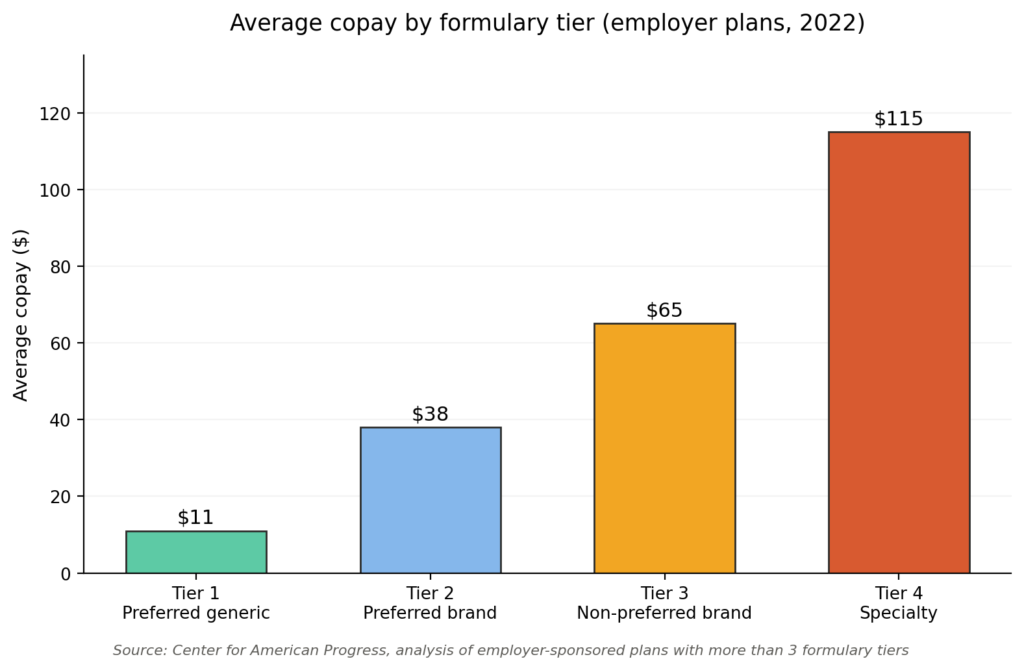
PBMs build something called a formulary — a tiered list of which drugs your plan covers and at what cost. Lower tiers (usually generics) come with a smaller copay; higher tiers (brand-name or specialty drugs) cost significantly more out of pocket. Drugs left off the formulary entirely may not be covered at all, meaning you’d pay full price.
Here’s the part that surprises most patients: manufacturers pay PBMs rebates to get their drugs placed favorably on the formulary. That rebate can influence which drugs end up cheaper for you — not necessarily which drug is clinically best for your situation. It’s a system built around negotiated pricing, not purely medical judgment.
Why the Same Drug Can Have Wildly Different Copays
Your copay is typically calculated off a drug’s public list price — not the discounted price the PBM actually negotiated behind the scenes. That gap between the two is part of how PBMs generate revenue, and it’s also why a “$150 drug” might have a $10 copay one month and jump the next — the underlying formulary tier, negotiated rebate, or contract terms shifted, even though nothing about your prescription changed.
There’s also a lesser-known practice worth knowing about called a “clawback.” In some cases, if your copay ends up higher than what the pharmacy is actually reimbursed for the drug, the PBM can take that difference back from the pharmacy — meaning you paid more than the drug’s real cost, and neither you nor your pharmacist necessarily saw that coming.
Why This System Feels So Opaque
The exact formulas PBMs use to set reimbursement and copay amounts are considered trade secrets. That’s the honest, unsatisfying truth: your pharmacist frequently cannot tell you why a price is what it is, because the PBM hasn’t disclosed the formula to them either. This has become enough of a national concern that it’s drawn scrutiny from the Federal Trade Commission and ongoing congressional attention over the past several years.
What You Can Actually Do With This Information
Ask your pharmacist if a lower-tier alternative exists. Sometimes a different drug in the same class sits on a cheaper formulary tier — this is a real conversation worth having, especially for maintenance medications you’ll be filling for years.
Check if your plan has a formulary lookup tool. Most insurers publish their formulary online. Searching your specific medication before a refill can flag a coming price change before it surprises you at pickup.
Ask about manufacturer copay assistance programs. For brand-name and specialty drugs especially, manufacturers sometimes offer direct copay assistance that can significantly offset what the PBM has set your cost-sharing at.
Compare cash price against your copay. Because copays are tied to list price rather than negotiated price, there are real situations — more often than people expect — where paying cash out of pocket is actually cheaper than using insurance at all. It’s always worth asking your pharmacist to run both numbers.
The Bottom Line
Nobody at your pharmacy counter is hiding your drug pricing from you out of spite — in most cases, they genuinely don’t have visibility into the formula either. Understanding that a PBM, not your pharmacy or your doctor, is the entity actually setting your copay changes the questions worth asking, and who you should really be asking them to.
References
- Center for American Progress — 5 Things To Know About Pharmacy Benefit Managers
- Colorado Health Institute — Understanding Pharmacy Benefit Managers
- Rightway Healthcare — What is a Pharmacy Benefit Manager (PBM)?
- Wikipedia — Pharmacy Benefit Management
- Indeed Career Guide — What Is a PBM?
Have a pharmacy pricing question that’s never made sense to you? That’s exactly what this site is for — [get in touch].