
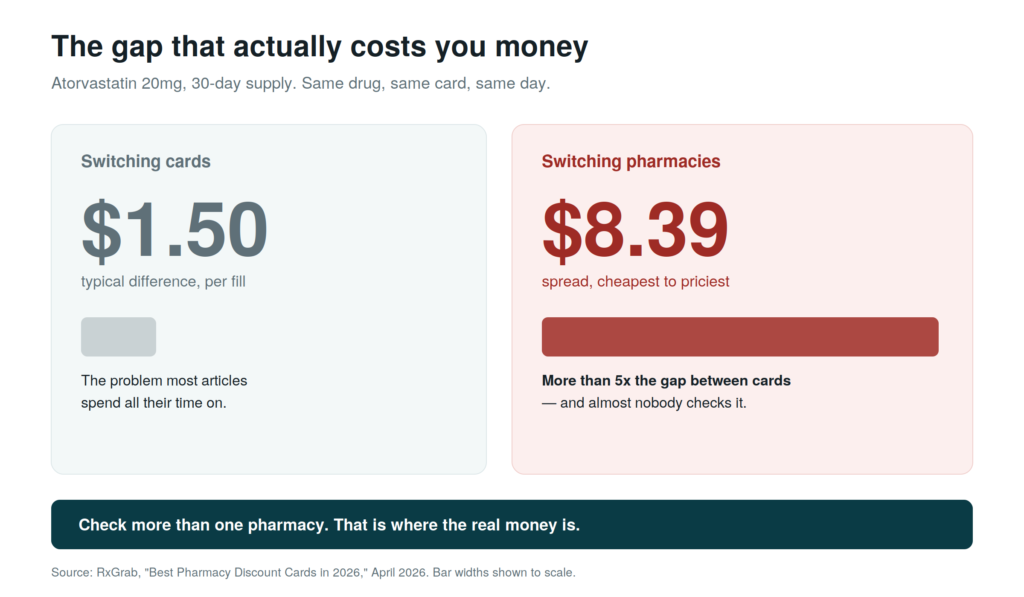
Quick answer: No prescription discount card is consistently cheapest. The quoted price can change with the medication, strength, dosage form, quantity, pharmacy, ZIP code, and the date you check.
Affiliate disclosure: This article may contain affiliate links. If you use one, PharmDecoded may earn a commission at no additional cost to you. Affiliate relationships do not change the comparison steps below.
What a Prescription Discount Card Is
A prescription discount card is not health insurance. It may provide access to a negotiated cash price at participating pharmacies. For a particular fill, the pharmacy generally processes either the insurance benefit or the discount price; the two prices usually are not combined.
Acceptance and prices can change. A quote is an estimate until the pharmacy processes the exact prescription, so confirm the final price before paying.
The Factors That Usually Matter Most
- Exact prescription: name, strength, dosage form, and quantity must match.
- Pharmacy location: two nearby pharmacies can return different prices.
- Timing: negotiated prices and participation can change without notice.
- Insurance: a copay may be lower than a discount price, especially when deductible and benefit tracking matter.
- Cash price: the pharmacy’s regular cash price can sometimes be competitive.
A Fair Way to Compare
- Use the same medication, strength, form, quantity, ZIP code, and date for every quote.
- Check more than one participating pharmacy.
- Compare the lowest discount quote with your insurance price and the pharmacy’s cash price.
- Ask the pharmacy to confirm the price before the prescription is filled.
- Repeat the comparison when the prescription or refill date changes.
Important Tradeoffs
Benefit tracking: If you have Medicare, Medicaid, or another health plan, paying outside the plan may not count the same way toward a deductible or out-of-pocket limit. Ask your plan or pharmacist how the choice applies to your coverage before switching.
Privacy: Review the privacy policy before creating an account or sharing health information. If a service offers a no-account option, compare the features and data requirements.
Pharmacy participation: A displayed quote does not guarantee that every location participates or that the exact price will be available at checkout.
Questions to Ask at the Pharmacy
- What is my price through insurance?
- What is the regular cash price?
- Can you confirm this discount quote for the exact prescription?
- Will paying outside my plan affect deductible or out-of-pocket tracking?
The Bottom Line
The best option is the one that gives you the lowest confirmed price for the exact prescription while fitting your coverage, privacy, and pharmacy needs. Compare again periodically because the result can change.
Explore current prescription-savings resources and review the terms, eligibility rules, and disclosure provided with each option.
Medical disclaimer: This article provides general consumer information about prescription pricing. It is not medical advice. Do not start, stop, switch, or change the dose of a medication based on price alone; talk with your pharmacist or prescriber about your own prescriptions.