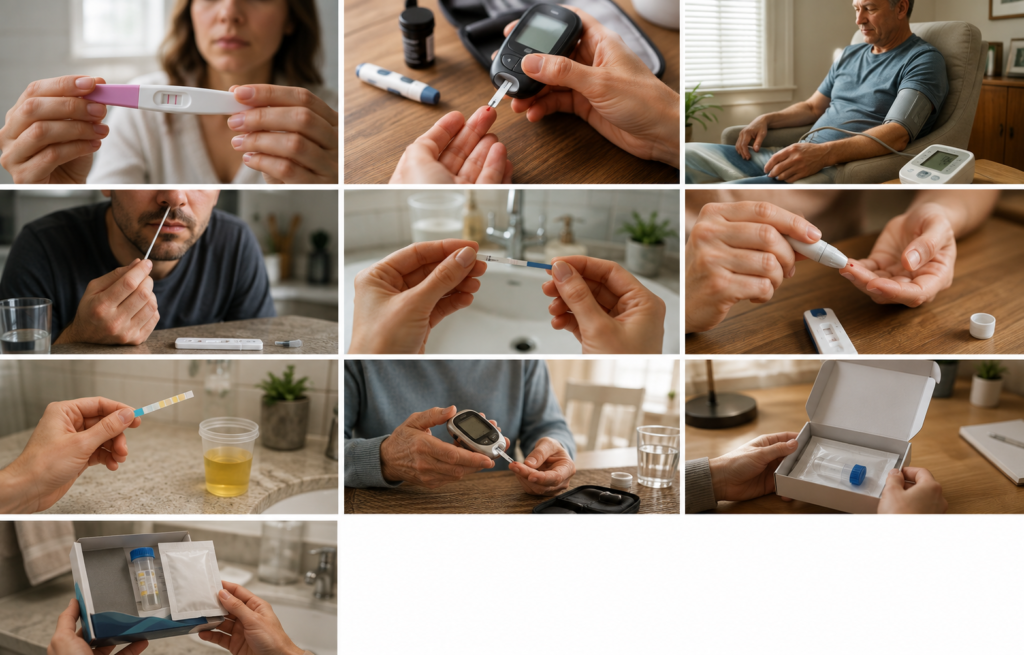
At-home tests can offer convenient screening or monitoring, but accuracy depends on the device, timing, sample collection, and follow-up. This guide explains what common tests measure and when a healthcare professional should be involved.
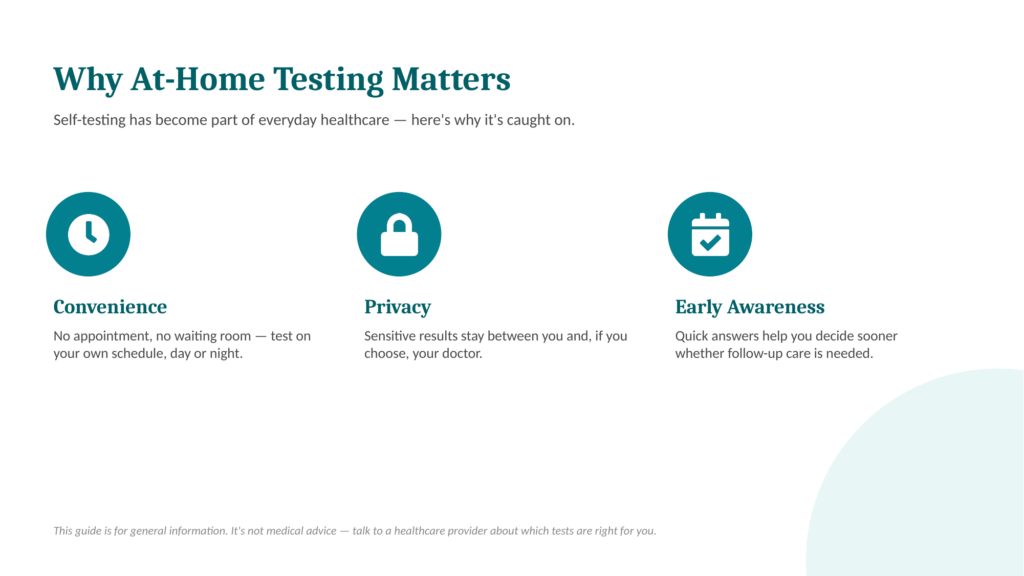
Before jumping into the list, it’s worth understanding why this shift toward self-testing happened in the first place.
With that context out of the way, here’s the full rundown — starting with the test almost everyone recognizes.
1. At-home testing – Pregnancy Test
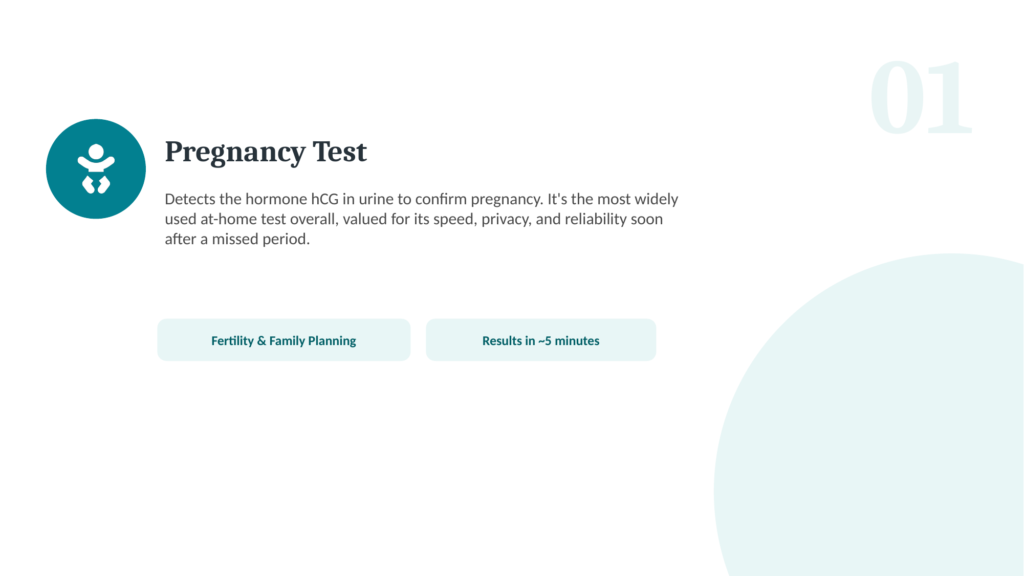
Follow the product instructions and contact a healthcare professional to confirm a positive result and discuss next steps.
2. At-home testing – Blood Glucose Test
Next up is a test a lot of people rely on daily, not just once.
Unexpected high or low readings, or symptoms such as unusual thirst or fatigue, should be discussed promptly with a healthcare professional.
3. At-home testing – Blood Pressure Check
Heart health is next on the list, and it’s one of the easiest things to track from your own couch.
Home readings can provide useful context between visits when you use a validated cuff and correct technique. Discuss unusual readings or a consistent pattern with a healthcare professional.
4. At-home testing – COVID-19 Antigen Test
This one barely needs an introduction at this point.
Follow the product timing instructions and current public-health guidance. A negative result may not rule out infection, especially early in an illness.
5. At-home testing – Ovulation Predictor Test
For anyone tracking a cycle or trying to conceive, this test has become a staple.
A basal body temperature log may provide additional context, but neither method confirms ovulation or fertility on its own.
6. At-home testing – Cholesterol Test
Heart health again, this time from a different angle.
It’s not a replacement for a full lipid panel at your doctor’s office, but it’s a handy check-in between visits.
7. At-home testing – UTI Test Strips
These strips can screen for signs that may be consistent with a urinary tract infection, but they do not confirm the cause.
A positive strip doesn’t confirm the exact type of infection, so plan on a follow-up if it’s your first time or symptoms stick around.
8. At-home testing – INR / Clotting Test
This one’s more specialized, but essential for the people who use it.
If you’re on a blood thinner, ask your doctor whether an at-home monitor makes sense for your situation.
9. At-Home STD Test Kit
Privacy is often the biggest reason people put off testing — this option removes that barrier.
Because it’s a self-collected sample, following the instructions closely matters for an accurate result.
10. At-home – Colorectal Cancer Screening
Some at-home stool tests are screening options for many adults beginning at age 45. The right test and schedule depend on age, risk factors, and medical history.
Follow the collection instructions closely. An abnormal result needs clinical follow-up and may require additional testing.
That’s the full list — ten different tests, ten different ways healthcare has become a little more accessible.
These tests can be a starting point, not a diagnosis. A healthcare professional should help interpret unexpected results and decide whether confirmatory testing or treatment is needed.
Compare Self-Pay Testing Options
Some self-pay services let you choose eligible tests online and visit a participating collection site. Availability, clinician review, and state restrictions vary. Review the current terms, preparation instructions, and follow-up process before ordering.
Affiliate disclosure: The two links below are affiliate links. If you use one, PharmDecoded may earn a commission at no additional cost to you. This does not affect which option you choose or the price-comparison guidance in this article.
Self-pay testing is not a substitute for urgent care, a physical exam, or personalized medical advice. Ask a healthcare professional which test is appropriate for your situation.
This post is for general information only and isn’t medical advice. Always talk to a healthcare provider about which tests make sense for you.
Got a test you rely on that didn’t make the list? Drop a comment below — I’d love to hear what’s worked for you.