
Affiliate disclosure: This article contains a paid affiliate links. If you purchase through the link, PharmDecoded may earn a commission at no additional cost to you.
Educational disclaimer: This content is for general educational and shopping-information purposes only. It is not medical advice, diagnosis or treatment. I am sharing general information from my experience as a pharmacy technician—not as a pharmacist, physician or diabetes educator. Consult your pharmacist, prescriber or diabetes care team for recommendations based on your health, medications and insurance coverage.
Choosing the right glucose meter and strips requires more than comparing the initial purchase price.
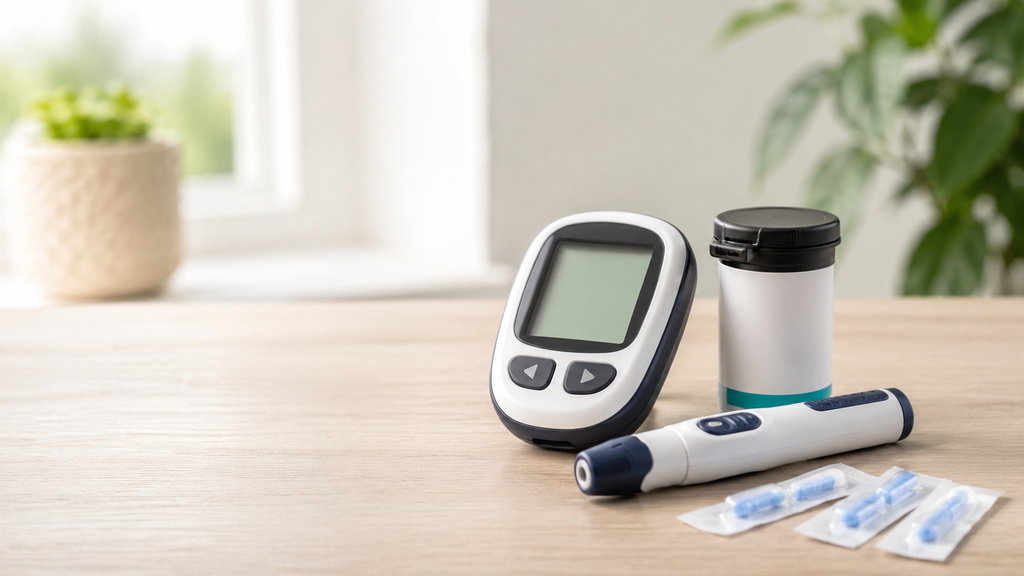
Glucose Meter and Strips
How to Match a Glucose Meter and Strips
Blood glucose meters help people check their blood glucose using a small blood sample. Although many meters appear similar, their test strips are generally designed for specific meter models.
Before purchasing a meter, consider the complete monitoring system—not only the initial price of the device.
The Meter and Test Strips Must Match
Test strips are not universal.
A strip from one product line may not work with a different meter, even when both products come from the same manufacturer. Using an incompatible strip may cause an error or unreliable result.
Before buying strips:
- Find the complete model name printed on your meter.
- Read the compatibility information on the strip package.
- Check the manufacturer’s instructions.
- Ask a pharmacist or the manufacturer if you are uncertain.
- Avoid opening the package until compatibility is confirmed.
Do not select strips based only on their appearance, brand name or package color.
Consider the Continuing Cost
The meter is usually purchased occasionally, while strips and lancets must be replaced regularly.
When comparing systems, consider:
- The price of compatible strips
- The number of strips in each package
- How frequently your healthcare professional instructs you to test
- Whether the supplies are consistently available
- Your insurance coverage
- Applicable deductibles, copays or quantity limits
- Whether a prescription is required for coverage
Online and in-store prices, promotions and availability can change. A displayed retail price may also differ from an insurance price.
Check Your Insurance Coverage
Health plans may prefer particular meters or strip brands. Before paying cash, contact your insurance company or pharmacy and ask:
- Which meters and strips are covered?
- Is a prescription required?
- Is the product covered under the pharmacy or medical benefit?
- Are there quantity limits?
- What is the estimated copay?
- Is additional documentation required?
PharmDecoded cannot verify an individual reader’s insurance coverage or expected out-of-pocket cost.
Features to Consider
Different meters offer different features. Depending on your needs, you may want to consider:
- Display size and readability
- Button size
- Required blood-sample size
- Ease of inserting and handling strips
- Memory for previous results
- Date and time tracking
- Smartphone or Bluetooth connectivity
- Audio features
- Portability
- Battery type
- Availability of compatible supplies
A product with additional features is not automatically more appropriate. Ask a qualified healthcare professional for help if a medical condition, vision limitation or dexterity problem affects your ability to test safely.
What May Be Included in a Meter Kit?
Package contents vary. A kit may contain:
- A blood glucose meter
- A lancing device
- A limited number of lancets
- A limited number of test strips
- A carrying case
- Batteries
- Printed instructions
Do not assume that a meter kit includes a full supply of strips or lancets. Review the package contents before purchasing.
Control solution may also need to be purchased separately. Follow the manufacturer’s instructions regarding control testing and device maintenance.
General Safety Reminders
The FDA and CDC recommend following the instructions supplied with the specific device.
General precautions include:
- Wash and completely dry your hands before testing.
- Use only strips intended for the exact meter model.
- Check strip expiration dates.
- Store the meter and strips as directed by the manufacturer.
- Keep strip containers properly closed.
- Do not use damaged or previously owned strips.
- Use a new lancet as directed.
- Never share a lancing device.
- Clean and maintain the meter according to its instructions.
- Review current product recalls and safety communications.
If a reading appears unexpected, does not match how you feel or is accompanied by an error message, follow the troubleshooting instructions supplied with the meter. Contact your pharmacist, healthcare provider or the manufacturer for assistance.
Seek urgent medical attention when you are experiencing severe or rapidly worsening symptoms. Do not delay necessary care while attempting to troubleshoot a device.
A Home Meter Does Not Diagnose Diabetes
An over-the-counter blood glucose meter is intended for monitoring. It should not be used by itself to diagnose diabetes, prediabetes or gestational diabetes.
Diagnosis requires appropriate testing and interpretation by a qualified healthcare professional. Contact your healthcare provider if you are concerned about your glucose levels or symptoms.
Traditional Meters and Continuous Glucose Monitors Are Different
A traditional meter checks glucose from a blood sample at a specific moment.
A continuous glucose monitor, commonly called a CGM, uses a sensor and provides readings throughout the day. These products have different instructions, limitations and insurance requirements.
Do not replace one type of monitoring device with another without discussing the change with your healthcare professional.
Shopping Checklist
Before purchasing, confirm:
- The exact meter model
- Compatible strip name
- Package quantity
- Kit contents
- Expiration date
- Manufacturer instructions
- Insurance coverage
- Estimated continuing cost
- Return policy
- Current FDA safety information
- Availability of replacement supplies
View Current Glucose Monitors and Strips Options
Here lists blood glucose meters, test strips, lancets and related supplies. Prices, promotions, inventory and delivery options vary by product, store and location.
Paid affiliate link: [VIEW CURRENT BLOOD GLUCOSE MONITORS AND TEST STRIPS]
If you purchase through this link, PharmDecoded may earn a commission at no additional cost to you. The presence of a product on a retailer’s website is not a recommendation from PharmDecoded and does not establish that the product is appropriate for your medical needs.
Always verify compatibility, insurance coverage, package information and current safety notices before purchasing.
Final Takeaway
Choose a blood glucose monitoring system only after checking the cost and availability of its compatible strips.
Your pharmacist can help answer product and compatibility questions. Your prescriber or diabetes care team should determine how often you test, what results mean for you and whether any changes to your treatment are needed.
Sources
- FDA: Using Glucose Meters and Test Strips Safely
- FDA: Blood Glucose Monitoring Devices
- CDC: Monitoring Your Blood Sugar
- NIDDK: Diabetes Tests and Diagnosis